

Who It Helps
- Children, from about 3 years
- Older adults and people who find the hard, fast blowing of spirometry difficult
- People with asthma or COPD, to check the small airways
- People recovering from lung infections, and those with unexplained breathlessness
How It's Done
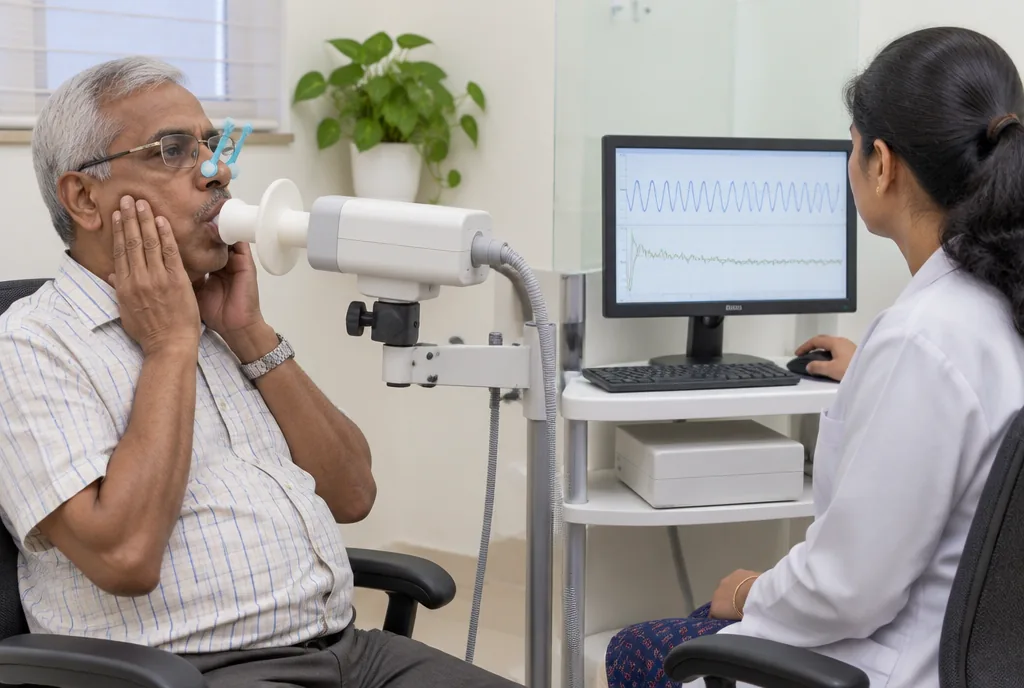
You sit upright with a nose clip, seal your lips around the mouthpiece and hold your cheeks gently with your hands. Then you breathe normally for about 30 seconds while the device sends small pulses. It's repeated a few times. The whole test takes about 10 to 15 minutes. It may be repeated after an inhaler puff.
What It Shows
Oscillometry measures resistance in the large and small airways. The small airways are often affected early in asthma and COPD, before spirometry changes. A clear improvement after an inhaler points towards asthma.
How to Prepare
Don't smoke or exercise for at least 1 hour before, and ask us whether to skip your inhalers that day.
Common Questions
Is it better than spirometry?
It's different. The two tests together give a fuller picture.
Does it hurt?
No. You feel a gentle fluttering in your mouth.
Can a 4-year-old do it?
Usually, yes. That is one of its main uses.
Medically reviewed by Dr Karan Singla, 16 Nov 2026