

Signs
- Loud snoring (kharrate) most nights
- A partner notices pauses in breathing, choking or gasping
- Waking unrefreshed, morning headaches
- Falling asleep at work or while driving
- Blood pressure that stays high despite medicines
Types of Sleep Study
Dr Karan advises which type suits you.
| Type | Where | What It Records |
|---|---|---|
| Level 1 | Sleep lab, with a technician | Brain waves, breathing, oxygen, heart, leg movement |
| Level 2 | At home | The same signals, without a technician |
| Level 3 | At home | Breathing, oxygen and heart rate only |
Treatment
CPAP (a mask that keeps the airway open with gentle air pressure) is the main treatment for moderate to severe apnea. Weight loss, changing sleep position, and avoiding alcohol and sedatives at night help. Some patients need an ENT or dental device opinion.
What Happens During Sleep Apnea
During sleep the throat muscles relax. In sleep apnea the airway narrows or closes, breathing stops or becomes shallow, and oxygen drops. The brain wakes you briefly to restart breathing, sometimes hundreds of times a night, usually without you remembering it.
Who Is at Higher Risk
- Being overweight, especially with a thick neck
- Men, and women after menopause
- Large tonsils, a small lower jaw, or a blocked nose
- Alcohol or sleeping pills at night
- Family history of sleep apnea
- An underactive thyroid
How sleepy are you? Doctors often use the Epworth Sleepiness Scale. It asks how likely you are to doze off in 8 everyday situations, such as reading, watching TV, or sitting in traffic. A high score points to excessive daytime sleepiness and helps decide whether you need a sleep study.
On the Night of a Home Study
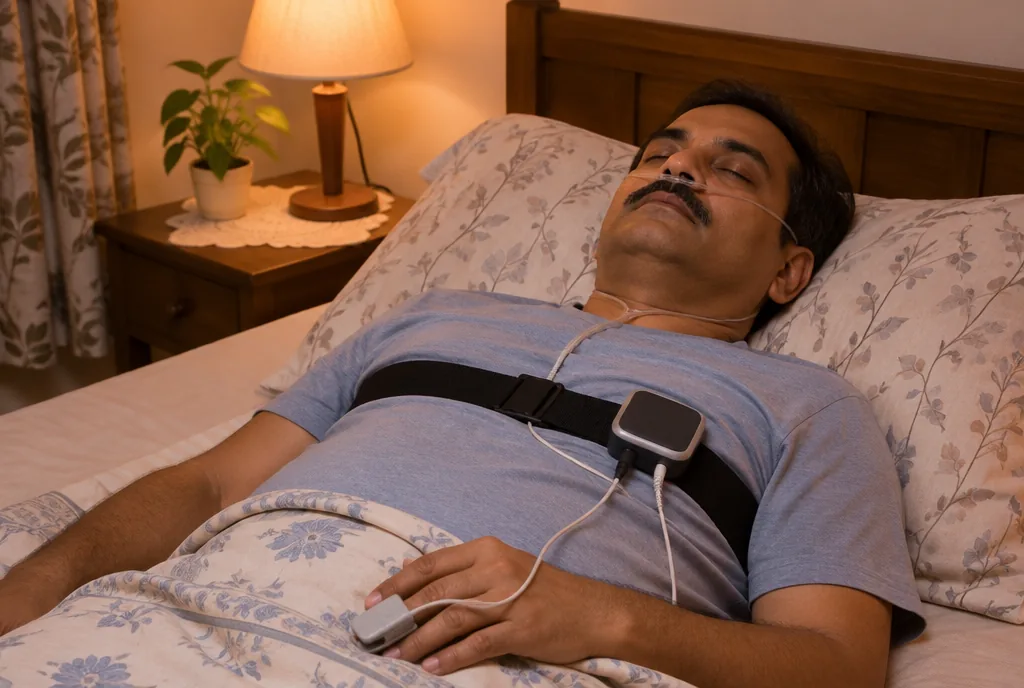
- Sensors are fitted: a small tube under the nose, a belt around the chest, and a clip on your finger.
- Sleep in your own bed at your usual time.
- Avoid alcohol and daytime naps on the day, and take your usual medicines.
- Return the device the next morning.
A lab study records more signals, including brain waves, and a technician watches through the night.
Reading the Result
The main number is the AHI, the number of times breathing stops or drops per hour of sleep. The oxygen dips are reported too.
Living with CPAP
Masks come in nasal, under-nose and full-face types, and the right fit matters more than anything else. Start with a few hours a night and build up. A humidifier helps with a dry mouth or nose. Clean the mask daily. Many people notice less daytime sleepiness once they use CPAP every night.
Snoring in Children
Loud snoring, mouth breathing, restless sleep, bedwetting and poor attention at school can mean sleep apnea in a child. Large tonsils and adenoids are a common cause, and an ENT opinion is often needed.
If CPAP Doesn't Suit You
Other options depend on the severity and the cause. A dental device that holds the lower jaw forward helps some people with mild to moderate sleep apnea. Positional therapy helps people whose apnea happens mostly on their back. Treating a blocked nose makes CPAP easier. Surgery on the nose, throat or jaw helps selected patients. Weight loss helps at every level.
Common Questions
Is snoring always sleep apnea?
No. Snoring with pauses, gasping or daytime sleepiness needs a test.
Do I need CPAP for life?
Usually, as long as the cause remains. Weight loss can reduce or remove the need in some people.
What does a sleep study cost?
It depends on the type of study. Ask us for the current fee when you book.
Can the study be done at home?
Home studies suit many adults with suspected sleep apnea. A lab study is better when other sleep problems or serious heart or lung disease are suspected.
What if I can't sleep on the test night?
Most people sleep enough for a result. If not, the study is repeated.
Is sleep apnea dangerous when driving?
It can cause sudden drowsiness at the wheel. Don't drive when you feel sleepy.
Can weight loss cure sleep apnea?
It can reduce it, and in some people it goes away.
Does a sleep study hurt?
No. The sensors sit on the skin, and nothing goes inside the body.
Will I have to stay in hospital?
Not for a home study. A lab study means one night in the sleep lab.
Medically reviewed by Dr Karan Singla, 16 Nov 2026