

Warning Signs
- A cough that lasts more than 3 weeks, or a change in a long-standing cough
- Blood in the phlegm
- Breathlessness or chest pain that doesn't settle
- Weight loss, tiredness and poor appetite
- A hoarse voice for more than 3 weeks
- Repeated chest infections in the same part of the lung
Who Is at Higher Risk
Smokers and former smokers, people exposed to second-hand smoke, wood or coal smoke, air pollution, asbestos or radon, and people with a family history of lung cancer. Lung cancer also occurs in people who have never smoked.
Tests
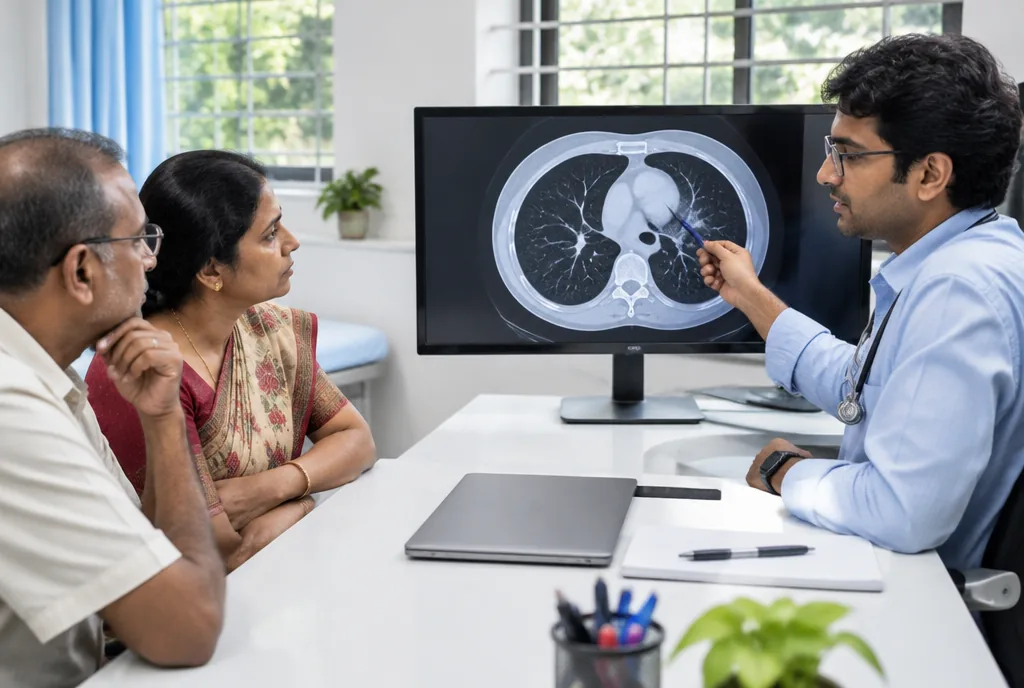
- A CT scan of the chest to see the size and position of the growth
- Bronchoscopy to look inside the airways and take samples
- EBUS-TBNA to sample lymph nodes next to the airways, which also shows how far the cancer has spread
- Radial EBUS to reach small nodules deep in the lung
- A PET-CT scan and other scans to complete staging
Why Staging Matters
The type and stage of the cancer decide whether surgery, chemotherapy, targeted medicines, immunotherapy or radiotherapy is right. Molecular tests on the biopsy sample show whether targeted medicines will work.
A Nodule on My Scan
Most small lung nodules aren't cancer. Dr Karan reviews the scan and decides between watching it with repeat scans and taking a sample.
Common Questions
Can lung cancer be found early?
Yes, sometimes. Get any warning sign checked without delay. Low-dose CT screening is an option for some heavy smokers.
Does a biopsy spread cancer?
No. Taking a sample does not make the cancer spread.
Who treats lung cancer?
Treatment is planned with a cancer specialist (oncologist). Dr Karan handles diagnosis, staging and airway problems such as blockage.
Medically reviewed by Dr Karan Singla, 16 Nov 2026