

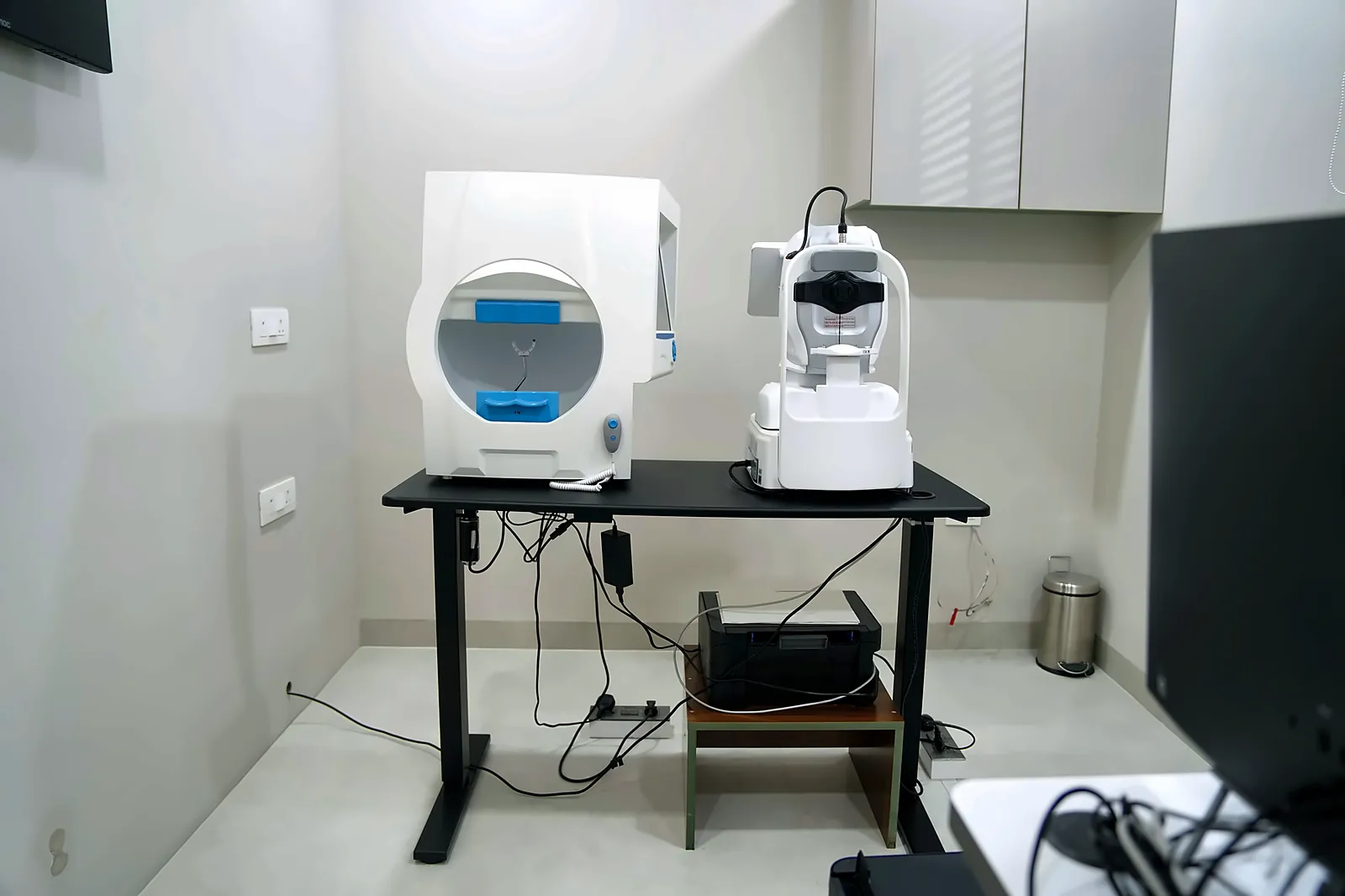
Who should get checked: anyone over 40, people with a family history of glaucoma, diabetes, high minus power or long-term steroid use.
Tests
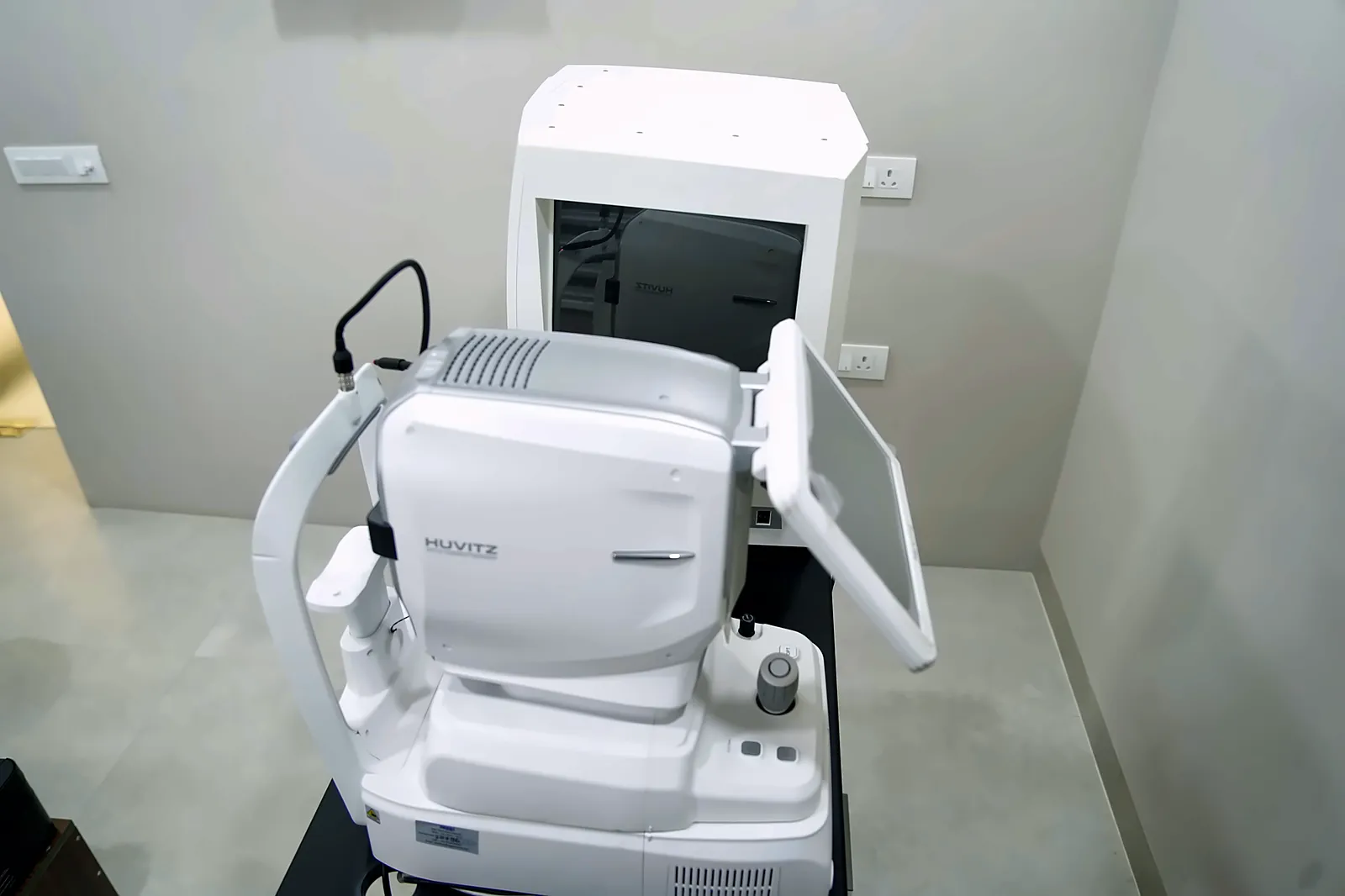
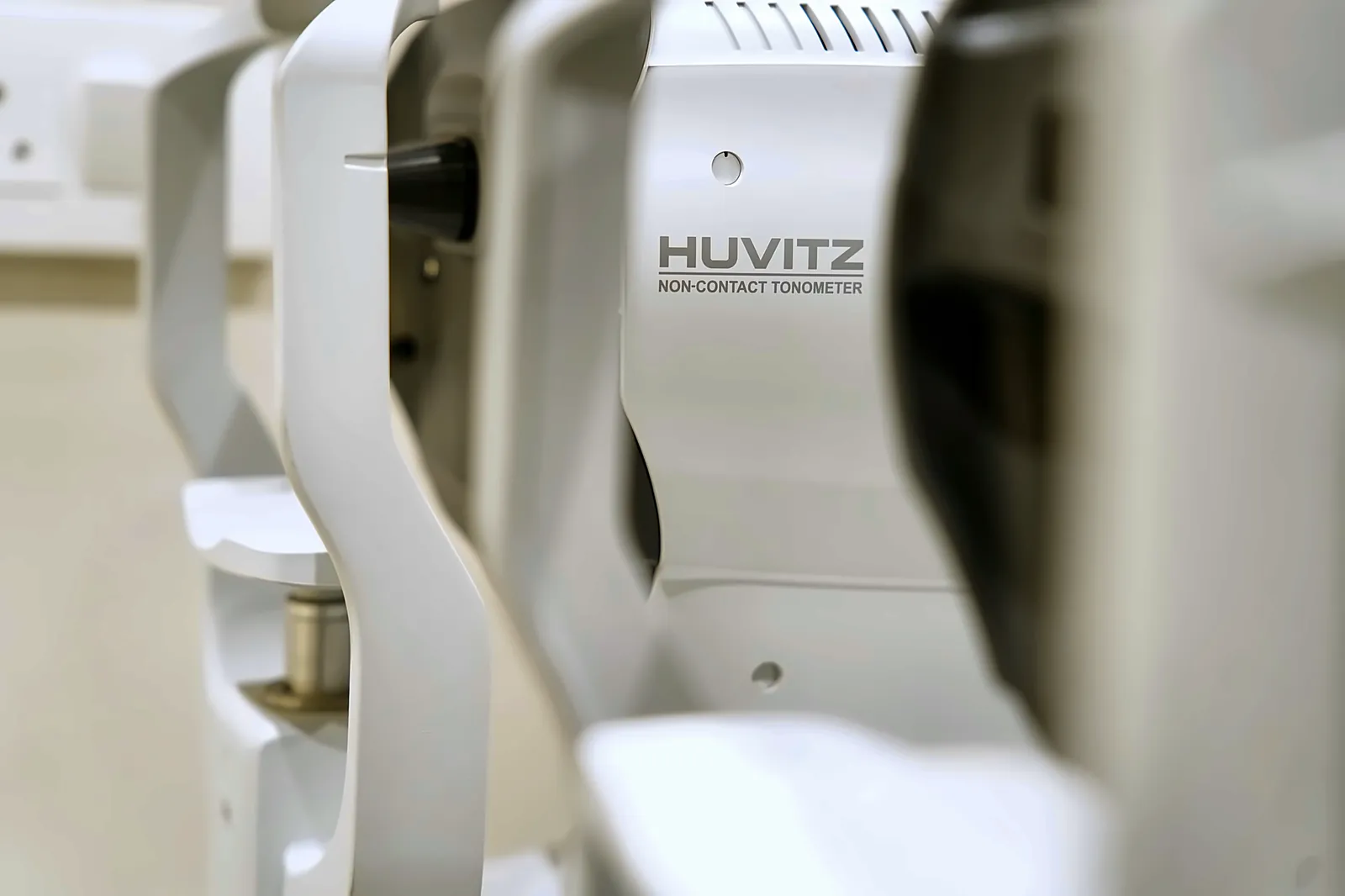
Eye pressure measurement, an optic nerve check, an OCT scan and a visual field test. All of these tests are done at MediSight Healthcare.
Treatment
Glaucoma can't be cured, but treatment keeps the remaining vision. Most patients need daily eye drops. Some need laser treatment or surgery to lower the pressure.
Sudden attack. A sudden painful red eye with blurred vision, haloes, headache and vomiting can be acute angle-closure glaucoma. It's an emergency, so go to Emergency.
Types of Glaucoma
- Open-angle glaucoma. The most common type. Pressure rises slowly, there is no pain, and side vision fades without being noticed.
- Angle-closure glaucoma. The eye's drainage angle is narrow or blocked. It is common in Indian eyes. It can build up slowly or come as a sudden painful attack. A small laser opening in the iris can prevent attacks in eyes with narrow angles.
- Normal-tension glaucoma. The optic nerve is damaged even though eye pressure is in the normal range.
- Secondary glaucoma. Caused by something else, such as steroid use, an eye injury, inflammation, diabetes or an advanced cataract.
- Childhood glaucoma. Large, cloudy or watering eyes in a baby, or a baby who avoids light, need an eye check soon.
What Each Test Shows
| Test | What It Checks |
|---|---|
| Tonometry | Eye pressure |
| Gonioscopy | Whether the drainage angle is open or narrow |
| Pachymetry | Corneal thickness, which affects the pressure reading |
| OCT of the optic nerve | Thickness of the nerve fibre layer, which thins with glaucoma |
| Visual field test | A map of your side vision |
Using Eye Drops Correctly
- One drop is enough. More just runs out of the eye.
- After the drop, close your eye and press gently on the inner corner for 1 to 2 minutes. More of the drop stays in the eye and less reaches the rest of the body.
- Wait at least 5 minutes between two different drops.
- Use them at the same time every day, and refill before you run out.
- Bring all your drops to every visit.
- Some drops cause redness, stinging or darker lashes. Tell Dr Muskaan instead of stopping them.
Laser and Surgery
Laser treatment can improve drainage in open-angle glaucoma or make a small opening in the iris for narrow angles. When drops and laser don't control the pressure, surgery creates a new drainage path for fluid. Dr Muskaan explains which option fits your eye and where it is done.
Follow-Up
Glaucoma is lifelong. Pressure checks are usually every 3 to 6 months, with visual field and OCT tests every year or as advised. Changes are slow and painless, so missed follow-ups let damage go unnoticed.
Check Your Family
Glaucoma runs in families. Brothers, sisters and children of someone with glaucoma should have an eye check from about 40, or earlier if advised.
Daily Life with Glaucoma
Regular exercise like walking is good for you. Long head-down positions, such as sirsasana in yoga, raise eye pressure, so ask before doing them. Tell every doctor you see that you have glaucoma. Some cold, allergy and stomach medicines can trigger an attack in eyes with narrow angles, and steroids of any kind can raise pressure.
Common Questions
Is glaucoma curable?
No, but treatment usually stops further vision loss.
Can I stop my drops if my eyes feel fine?
No. Glaucoma has no symptoms, so stopping the drops lets damage continue unnoticed.
Does glaucoma cause headaches?
Most glaucoma doesn't. A sudden angle-closure attack causes severe eye pain, headache and vomiting, and needs urgent care.
Can a routine eye check find glaucoma?
Yes, if eye pressure and the optic nerve are checked. A vision test alone can't find it.
Do steroids cause glaucoma?
Long-term steroid drops, creams, inhalers or tablets can raise eye pressure in some people. Use them only as prescribed, with pressure checks.
Can I drive with glaucoma?
It depends on your visual field. The field test shows whether your side vision meets the driving standard.
Can cataract surgery help glaucoma?
In some eyes with narrow angles, removing the cataract opens up the drainage angle and lowers pressure. Dr Muskaan tells you if this applies to you.
Medically reviewed by Dr Muskaan Bansal, 16 Nov 2026