

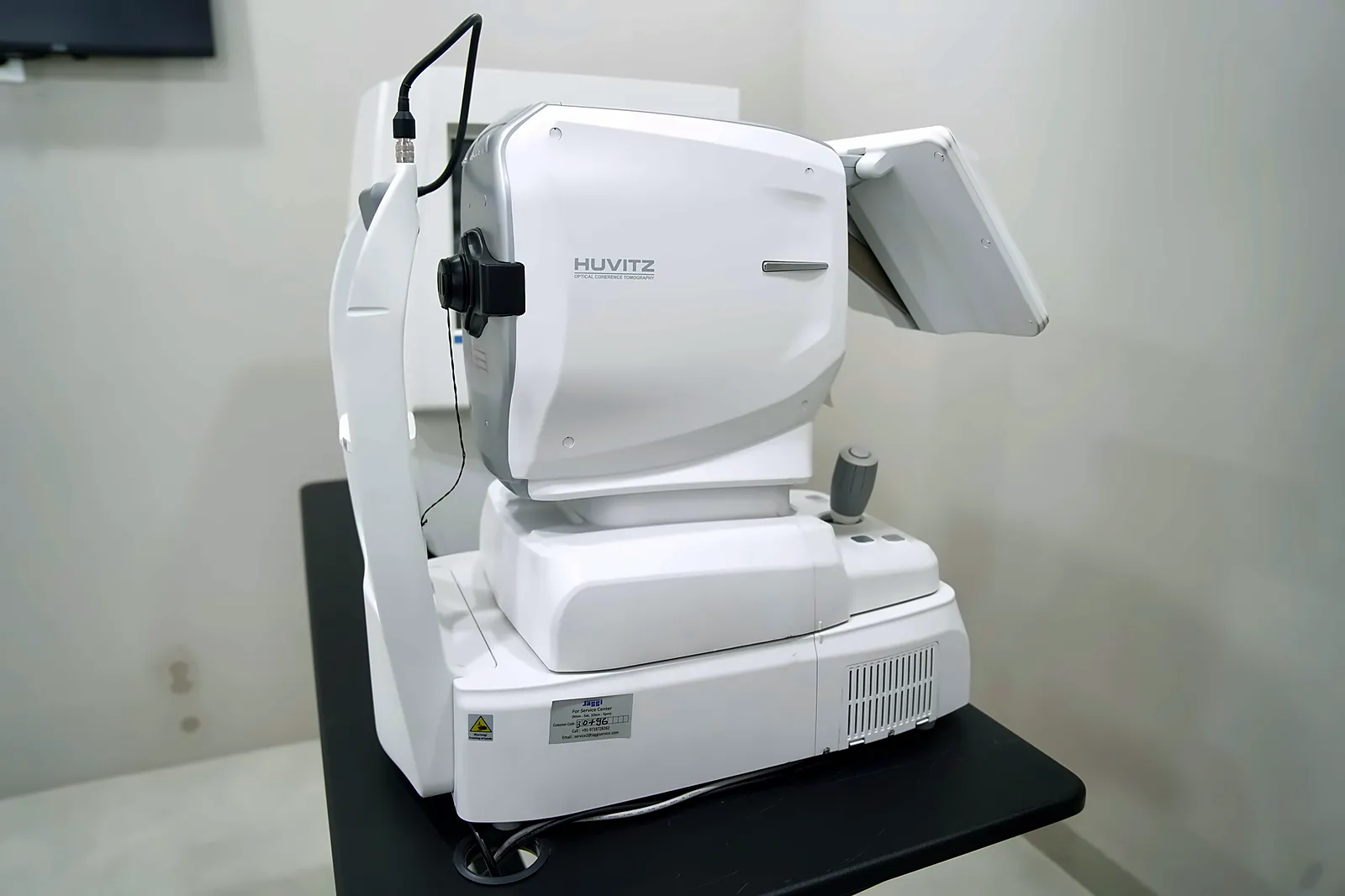
What we check and treat: diabetic retinopathy, swelling at the centre of the retina (macular oedema), age-related macular degeneration, retinal vein blockages, uveitis, and floaters or flashes.
Diabetic Eye Checks
People with diabetes should have a dilated retina check every year, even with good vision. Bring your latest sugar reports.
Treatment
Retinal laser, injections into the eye (anti-VEGF) and treatment of the cause. OCT scans and retina checks are done at MediSight Healthcare. If retinal surgery is needed, Dr Muskaan arranges a referral to a retina surgeon.
Go to the doctor the same day for a sudden shower of floaters, flashes of light, or a curtain over part of your vision. These can mean a retinal tear or detachment.
Tests We Use
An OCT scan shows the layers of the retina in fine detail and picks up swelling before it affects vision. Fundus photographs record the retina so changes can be compared over time. For a full check, the pupils are widened with drops.
After Dilating Drops
Vision stays blurry and bright light feels harsh for 4 to 6 hours. Bring sunglasses, and don't drive yourself home.
Age-Related Macular Degeneration
AMD affects the centre of the retina after about 50. Straight lines looking wavy, or a dark patch in the middle of your vision, need a check within days.
Common Questions
Can diabetic retinopathy be reversed?
Early damage can stop getting worse with good sugar, blood pressure and cholesterol control and timely treatment. Lost vision may not fully come back, which is why yearly checks matter.
Are injections into the eye painful?
The eye is numbed with drops first. Most people feel pressure rather than pain.
How often should I get a retina check?
Every year with diabetes, or as advised if changes are found.
Medically reviewed by Dr Muskaan Bansal, 16 Nov 2026