

Who Is Suitable
- Age 18 or above, with power that has been stable for at least a year
- A healthy cornea that is thick enough
- No active eye infection, uncontrolled dry eye or keratoconus
- Not pregnant or breastfeeding
If LASIK isn't right for your eyes, ICL or PRK may be.
Tests Before Surgery
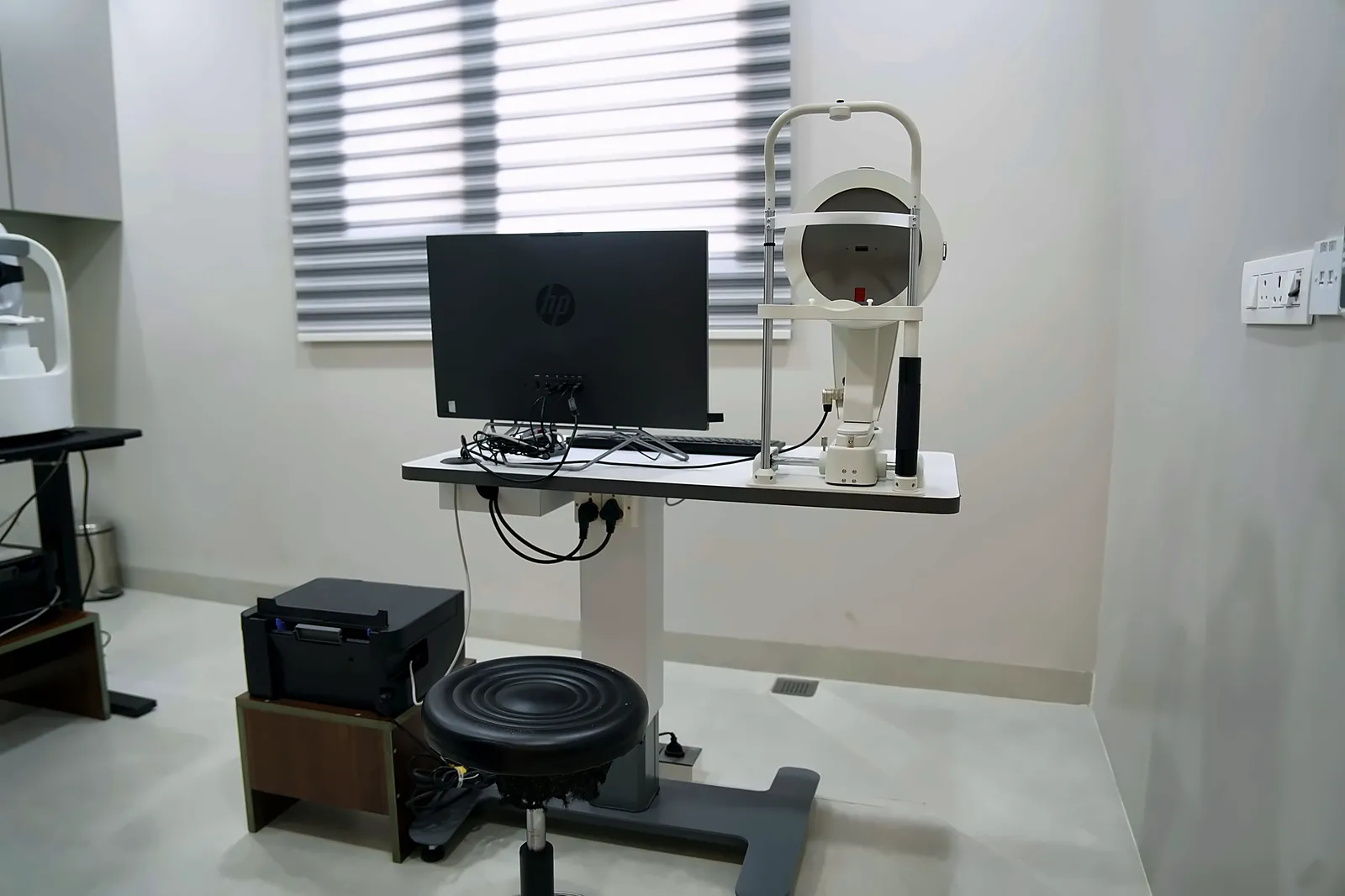
Corneal topography and thickness (pachymetry), power checks, a dry eye check and a retina check. They take about 1 to 2 hours. Stop soft contact lenses 2 weeks before.
Types We Offer
MediSight Healthcare offers LASIK, Contoura Vision LASIK, SMILE, PRK, Trans-PRK and ICL.
| Procedure | How It Works | Typical Recovery |
|---|---|---|
| PRK | The surface layer is removed and the laser reshapes the cornea; no flap | Several days of discomfort, about a week to work |
| Trans-PRK | The laser removes the surface layer and reshapes the cornea in one step; no touch, no flap | Like PRK |
| LASIK (femto or blade) | A thin flap is made, the laser reshapes underneath, the flap is replaced | Back to desk work in 1 to 2 days |
| Contoura Vision LASIK | LASIK guided by a detailed map of your cornea | Same as LASIK |
| SMILE | The laser removes a tiny disc through a small cut; no flap | Back to desk work in 1 to 2 days |
Cost
The price depends on the procedure type. You get a quote after your tests.
On the Day of Surgery
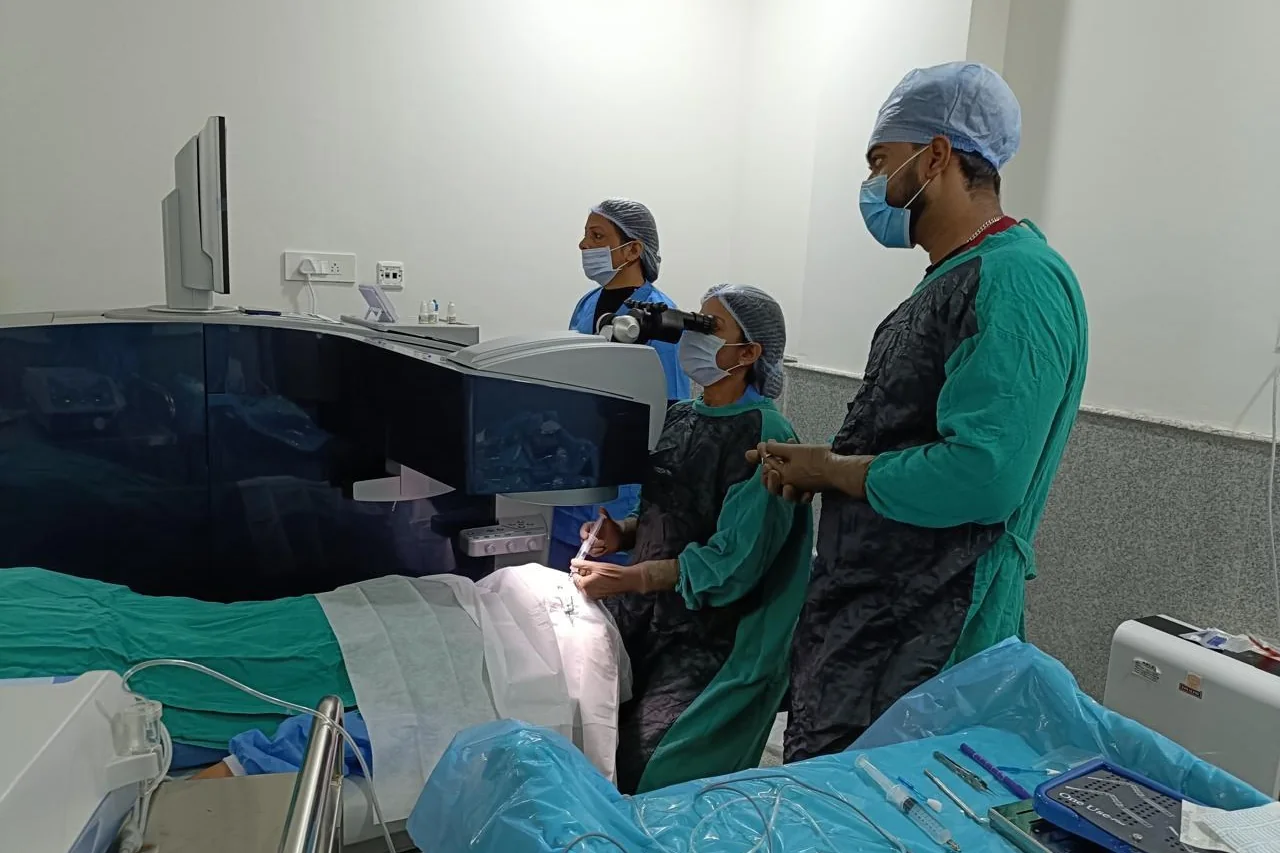
Your measurements are checked again, numbing drops go in, and a small clip holds the lids open so you don't need to worry about blinking. You look at a target light while the laser works. The laser part takes under a minute per eye, and the whole visit takes a few hours. Most people have both eyes treated in one sitting. Come with someone who can take you home.
Recovery Timeline
This is for LASIK and SMILE. PRK takes longer, as shown in the table above.
- First few hours: mild discomfort, mild blurring of vision and sensitivity to light.
- Next day: a check-up. Most people see well enough for daily tasks.
- First week: vision improves a lot. Avoid rubbing your eyes and avoid splashing water directly into them.
- First month: vision stabilises. Use lubricating drops for dryness, and avoid swimming and dusty places for about 2 weeks.
- 3 to 6 months: full recovery.
Possible Side Effects
Dry eyes, glare or halos around lights at night, and power that is slightly under- or over-corrected, which may need glasses or a second treatment. Infection and flap problems are rare. Dr Muskaan explains the pros and cons of each surgery and helps you choose the procedure that best suits your eyes.
How the Procedure Is Chosen
Corneal thickness, the amount of power, pupil size, dry eye, your work and your sports all decide which procedure suits you. A thin cornea or very high power often points to ICL instead of laser. People who play contact sports may be advised a procedure without a flap.
Glasses, Contact Lenses or Surgery
Glasses and contact lenses remain safe choices. Surgery suits people who find them limiting for work, sport or daily life. Wearing contact lenses for long hours, or sleeping in them, carries a risk of eye infection.
Reading Glasses After 40
Near focus weakens naturally from about 40 to 45. This is called presbyopia. LASIK for distance doesn't stop it, so most people need reading glasses at some point. Options for near vision can be discussed at your consultation.
Common Questions
Can my power come back?
Results are usually stable. A small change can happen over the years, and reading glasses after 40 are normal ageing, not LASIK failing.
Does LASIK cause dry eyes?
Dry eye is common for the first few months and is treated with drops. We check for dry eye before surgery.
When can I use screens again?
Usually the next day, with breaks. No swimming for about 2 weeks.
Is LASIK covered by insurance?
Usually not, though some policies cover high power. Check your policy, or ask us to check it for you.
Can I join the army or police after LASIK?
Rules differ by force and change over time. Check the current recruitment notice before surgery.
Is LASIK painful?
Numbing drops are used. You feel pressure for a few seconds, and the eyes may feel gritty for a few hours after.
What is the right age for LASIK?
After 18, once your power has been stable for a year. There is no fixed upper age, but after about 45, reading vision and early cataract are considered first.
Can both eyes be done together?
Usually yes.
When can I drive?
Usually after the first check-up, once your vision is confirmed to meet the driving standard.
Can I have LASIK with high power?
It depends on corneal thickness. Very high power often suits ICL better.
Medically reviewed by Dr Muskaan Bansal, 16 Nov 2026